Forex Lot Sizes Explained: Standard, Mini & Micro Lots
Trader
Quick answer: What is a lot size in forex?
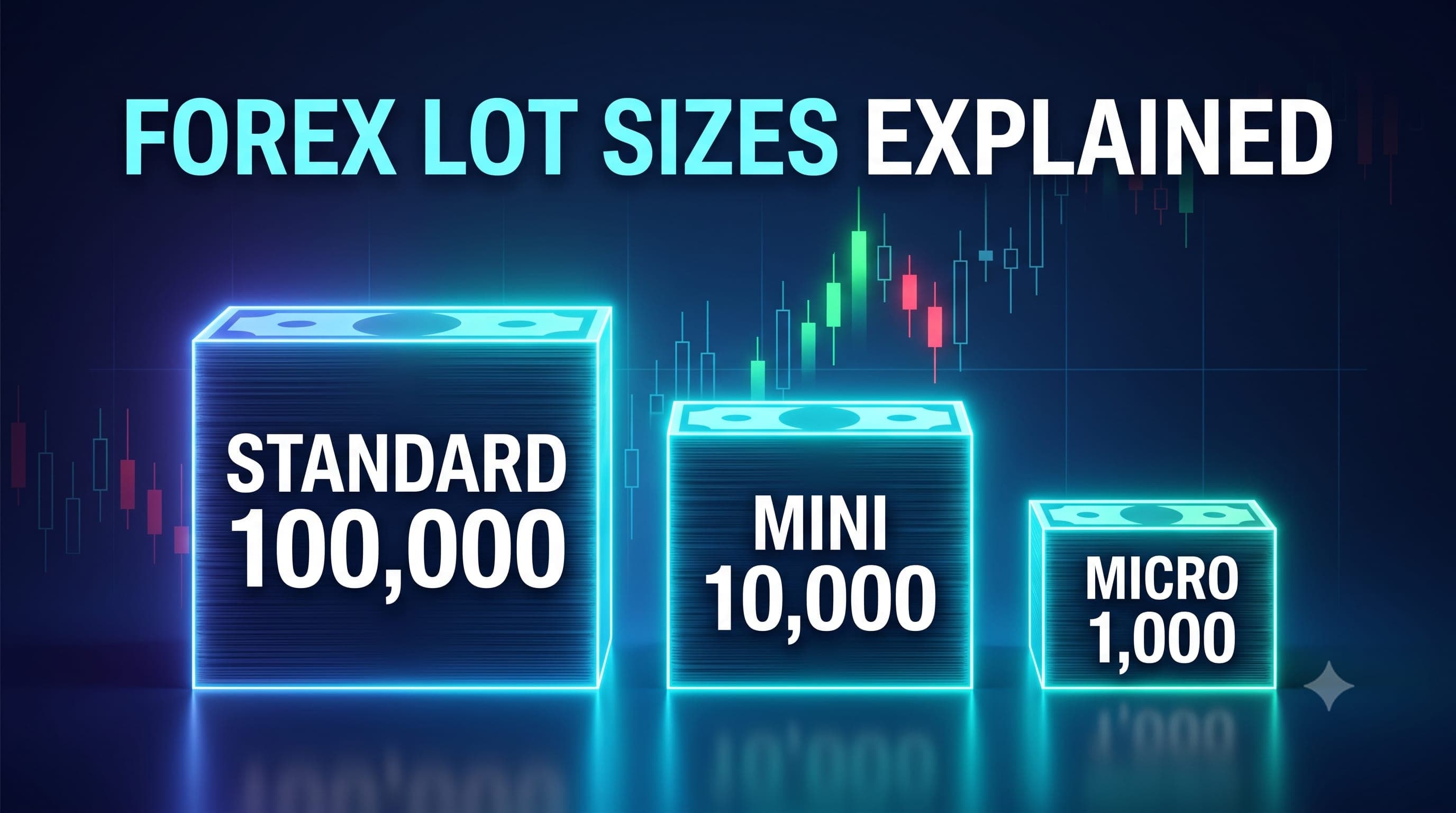
A lot is the unit of trade size in forex it’s how many currency units you’re buying or selling. A standard lot is 100,000 units, a mini lot is 10,000, and a micro lot is 1,000. Lot size directly controls how much each pip is worth, which means it controls your risk. Bigger lots mean bigger gains and bigger losses.
Key takeaways
Standard lot = 100,000 units; mini = 10,000; micro = 1,000.
Lot size decides how much money each pip is worth.
Bigger lots magnify both profit and loss.
Beginners usually start with micro or mini lots to keep risk small.
What does “lot” mean in forex?
A lot is simply a standardised bundle of currency units. Instead of buying an odd number of units, traders trade in these set sizes. It keeps position sizes consistent and makes risk easy to calculate.
Think of it like buying eggs by the dozen rather than one at a time lots are the market’s standard “packaging” for trade size.
The three main lot sizes
There are three common lot sizes, plus nano lots at some brokers. A standard lot is 100,000 units, where each pip is often worth around $10. A mini lot is 10,000 units, with pips worth about $1. A micro lot is 1,000 units, with pips worth roughly $0.10. Some brokers also offer nano lots (100 units) for very small positions.
The smaller the lot, the smaller the money-per-pip and the easier it is to keep risk under control while learning.
How does lot size affect risk?
Lot size is one of the main levers of risk in every trade. Because lot size sets your pip value, it decides how much money you make or lose per pip of movement. Trade a standard lot and a 20-pip loss might cost around $200; trade a micro lot and the same move costs about $2.
This is why position sizing matters so much: you choose your lot size based on how much you’re willing to risk, not on how big you can go.
How to choose the right lot size
Work backwards from your risk, not forwards from ambition. Decide the money you’ll risk on a trade (often 1–2% of your account), measure your stop-loss distance in pips, and pick the lot size so that distance equals your chosen risk. This keeps every trade sized correctly, whatever the setup.
Pips and lots work hand in hand here understanding what a pip is makes lot sizing much clearer.
Why beginners should start small
Small lots let you learn without risking serious money. Micro or nano lots keep losses tiny while you build skill, test your plan, and get used to the emotions of live trading. There’s no rush to trade bigger surviving long enough to improve matters far more than the size of any single trade. Over-sizing is one of the classic beginner mistakes.
How FXfolder helps you trade the right size
FXfolder is an educational community platform, not a signal seller, and disciplined sizing is part of what it models:
Educational analysis and a beginner-friendly dashboard.
Transparent trade history showing risk-controlled ideas.
A free Telegram community to learn alongside other traders.
Frequently asked questions
How many units is one lot in forex?
One standard lot is 100,000 units of the base currency. A mini lot is 10,000 units, a micro lot is 1,000, and a nano lot (where offered) is 100.
What lot size should a beginner use?
Beginners usually start with micro lots (1,000 units) or even nano lots, so losses stay tiny while they learn. The right size ultimately depends on your account size and risk per trade.
How does lot size affect profit and loss?
Lot size sets your pip value, so it directly scales both profit and loss. A larger lot earns or loses more money per pip; a smaller lot earns or loses less.
How do I calculate the right lot size?
Decide your risk in money (e.g. 1% of your account), measure your stop-loss in pips, and choose the lot size so that stop distance equals your risk. This keeps every trade consistently sized.
The bottom line
Forex lot sizes standard, mini, and micro set how many units you trade and therefore how much each pip is worth. Because lot size controls risk, choose it from how much you’re willing to lose, not how much you hope to make. Start small, size from risk, and grow as your skill does.
Learn disciplined sizing with a community: Join FXfolder’s free Telegram channel for educational, transparent trade ideas.
Risk disclaimer: Forex trading involves substantial risk of loss and is not suitable for every investor. All content on FXfolder is for educational purposes only and does not constitute financial, investment, or trading advice. Past performance is not indicative of future results. Always do your own research and consider your risk tolerance before trading.
Educational content only. Not investment advice.