Understanding Forex Spreads: What They Are and Why They Matter
Trader
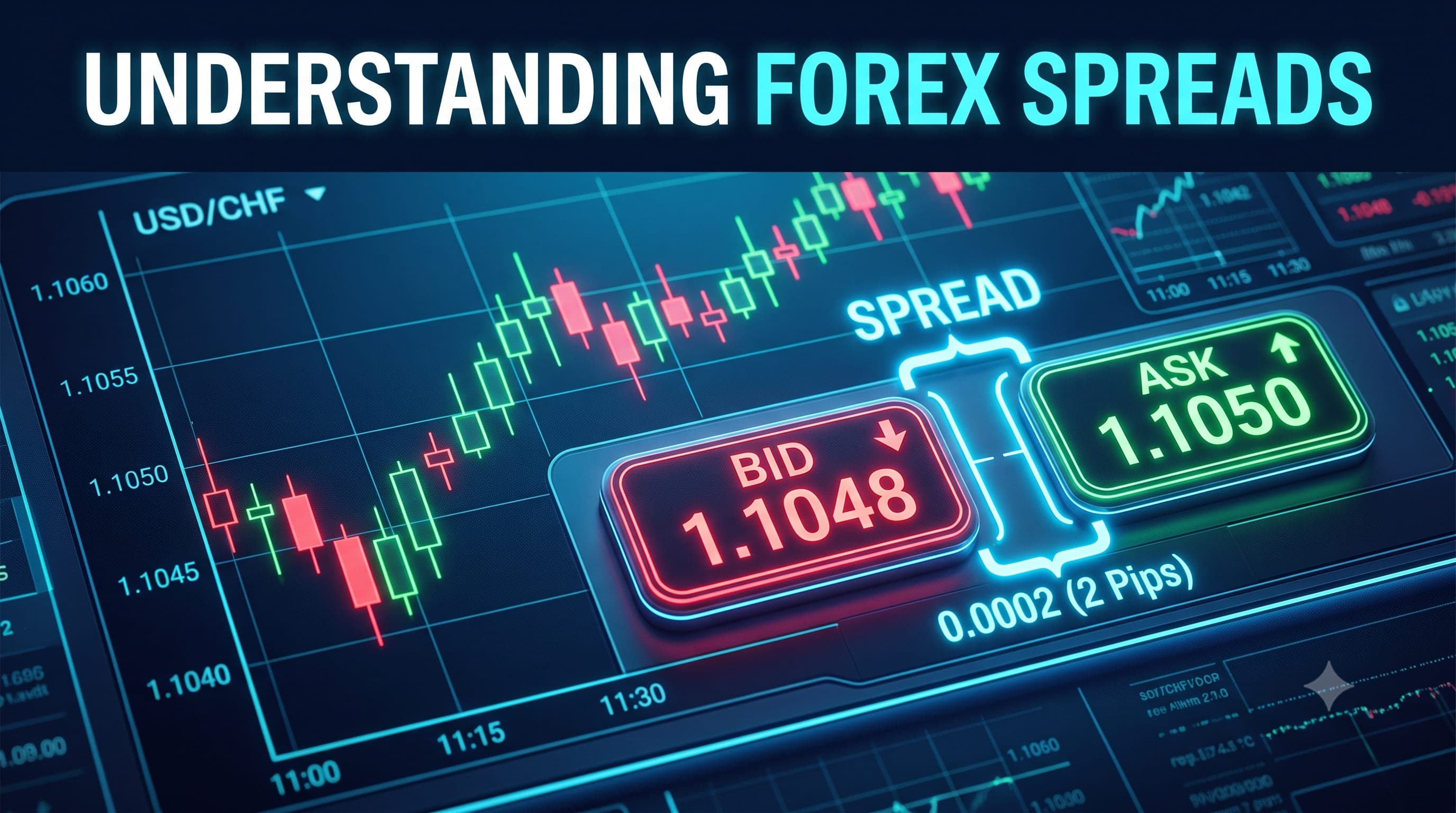
Quick answer: What is the spread in forex?
The spread is the difference between the buy (ask) price and the sell (bid) price of a currency pair and it’s the main cost of every trade. Measured in pips, it’s effectively what you pay the broker to enter the market. A tighter spread means lower costs; a wider spread eats more of your potential profit.
Key takeaways
The spread is the gap between the bid (sell) and ask (buy) price.
It’s the primary trading cost, measured in pips.
Major pairs usually have tighter spreads than exotic pairs.
Spreads widen during low liquidity and big news events.
How does the bid ask spread work?
Every pair has two prices: the bid (what you can sell at) and the ask (what you can buy at). The ask is always slightly higher than the bid, and that small gap is the spread. The moment you open a trade, you start slightly “in the red” by the spread, because you buy at the higher price and would sell at the lower one.
This is normal and unavoidable it’s simply the cost of doing business in the market.
Why is the spread the main cost of trading?
Because you pay it on every single trade. Unlike a one-off fee, the spread is baked into each entry and exit. For active traders, especially scalpers, spreads add up fast which is why they matter so much. A strategy that ignores spread costs can look profitable on paper and lose money in reality.
Frequent trading amplifies this, which is one reason fast styles like scalping demand tight spreads.
What makes spreads wider or tighter?
Spreads mainly reflect liquidity. A few key factors:
The pair — major pairs like EUR/USD have tight spreads; exotic pairs are much wider.
Liquidity — busy market hours have tighter spreads than quiet ones.
News events — spreads can widen sharply around major announcements.
Broker type — some brokers offer fixed spreads, others variable ones that move with the market.
Fixed vs variable spreads
A fixed spread stays the same regardless of market conditions; a variable spread changes with liquidity. Fixed spreads offer predictability, while variable spreads can be tighter in calm markets but widen during volatility. Neither is universally better — what matters is understanding which your broker uses and how it affects your costs.
How to keep spread costs low
Trade liquid major pairs where spreads are naturally tighter.
Trade during active hours the London New York overlap tends to have the tightest spreads. See our guide to the best time to trade forex.
Be cautious around big news, when spreads can balloon.
Factor spread into your plan so your targets account for the cost.
How FXfolder helps you understand costs
FXfolder is an educational community platform, not a signal seller, and understanding real trading costs is part of the education:
Educational analysis that accounts for realistic conditions.
Transparent trade history showing how ideas actually performed.
A free Telegram community to learn alongside other traders.
Frequently asked questions
What is a good spread in forex?
Tighter is better. On major pairs like EUR/USD, spreads are often under a couple of pips in normal conditions. Exotic pairs have much wider spreads, which increases your cost.
Why did my spread suddenly get wider?
Spreads widen when liquidity drops during quiet hours, market opens, or around major news releases. Variable-spread accounts feel these changes most.
Is the spread the only cost of trading forex?
The spread is the main cost, but some brokers also charge commissions or overnight (swap) fees. Always check your broker’s full cost structure before trading.
Does the spread affect scalpers more?
Yes. Because scalpers trade frequently, spread costs add up quickly, so tight spreads are especially important for fast trading styles.
The bottom line
The forex spread is the gap between the bid and ask price the main cost you pay on every trade. Tighter spreads mean lower costs, so trade liquid pairs during active hours, watch out around news, and always factor the spread into your plan. Small costs, repeated often, add up.
Learn the real mechanics with a community: Join FXfolder’s free Telegram channel for educational, transparent trade ideas.
Risk disclaimer: Forex trading involves substantial risk of loss and is not suitable for every investor. All content on FXfolder is for educational purposes only and does not constitute financial, investment, or trading advice. Past performance is not indicative of future results. Always do your own research and consider your risk tolerance before trading.
Educational content only. Not investment advice.