Trading Forex News with an Economic Calendar: A Practical Guide
Trader
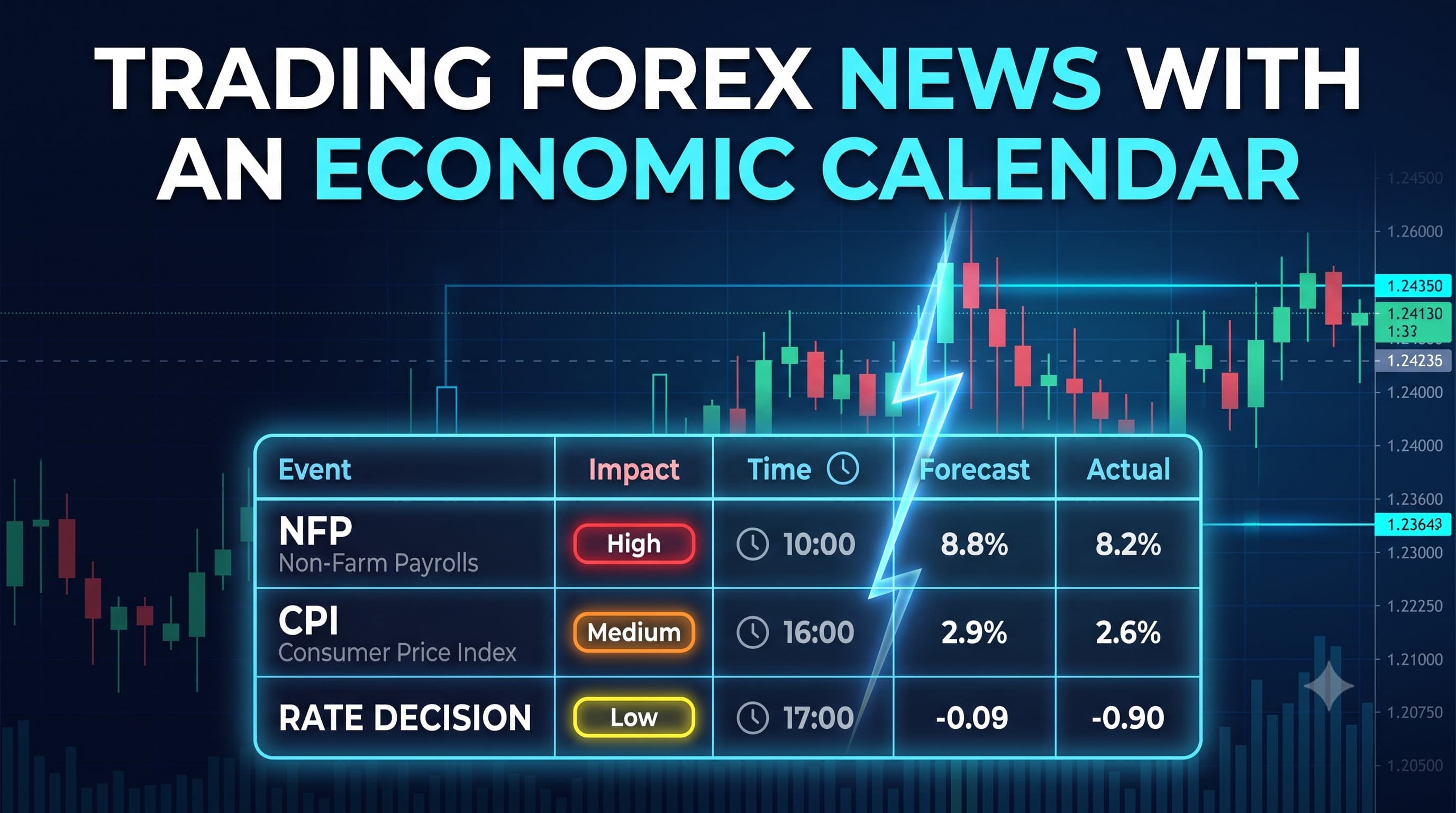
Quick answer: What is a forex economic calendar?
An economic calendar is a schedule of upcoming economic events and data releases that can move currency prices. It lists things like interest-rate decisions, inflation reports, and jobs data, with the time and expected impact of each. Traders use it to know when big moves are likely and often to avoid getting caught on the wrong side of sudden volatility.
Key takeaways
An economic calendar lists scheduled news that can move markets.
High-impact events (rates, inflation, jobs) cause the biggest moves.
News can create sharp, unpredictable spikes a real risk to open trades.
Many traders use it to plan around news, not just to trade it.
Why does economic news move forex?
Because currency value reflects the health of an economy. When new data or a central-bank decision changes expectations about growth, inflation, or interest rates, traders reprice the currency almost instantly. That’s why a single report can move a pair sharply in seconds. This is the heart of fundamental analysis.
Which economic events matter most?
A handful of high-impact events drive most of the big moves. The ones to watch include:
Interest-rate decisions — central-bank moves are among the most powerful market drivers.
Inflation data (CPI) — shapes expectations about future rate changes.
Employment reports — like the US non-farm payrolls (NFP), a major monthly event.
GDP figures — a broad read on economic health.
Central-bank speeches — comments that hint at future policy.
How to read an economic calendar
Most calendars show the event, the time, the country, and an impact rating. They also list three numbers: the previous reading, the forecast (what markets expect), and the actual figure once released. The market often reacts to the surprise the gap between forecast and actual. A result far from expectations usually causes the biggest moves.
Focus on high-impact events for the currencies you trade, and note the times in your own timezone. For Indian traders, many major US releases land in the evening IST. See also the best time to trade forex.
Should beginners trade the news?
Often, the safest choice for beginners is to avoid trading right at big releases. News moves can be violent and unpredictable, with sudden spikes, wider spreads, and slippage that can blow through stop-losses. Many experienced traders step aside during major releases rather than gamble on the direction. Trading the news well is an advanced skill, not a beginner shortcut.
How to use the calendar for risk management
Even if you don’t trade the news, the calendar protects you. Checking it before you trade tells you when volatility is coming, so you can avoid opening risky positions right before a major release — or tighten risk on trades you’re already in. Getting surprised by scheduled news is an avoidable mistake.
How FXfolder helps you stay informed
FXfolder is an educational community platform, not a signal seller, and market context is part of what it shares:
Educational analysis that considers upcoming events and conditions.
A real-time community feed and Telegram updates.
Transparent trade history so you can see how ideas handled news-driven markets.
Frequently asked questions
What is the most important event on the economic calendar?
Interest-rate decisions and major employment reports (like US NFP) are among the highest-impact events. Inflation data (CPI) is also closely watched because it influences rate expectations.
Where can I find a forex economic calendar?
Many financial websites and broker platforms offer free economic calendars. Look for one that lets you filter by country and impact level, and shows times in your timezone.
Should beginners trade during news events?
Usually not. News causes sharp, unpredictable moves and wider spreads that can trigger stop-losses. Many traders avoid trading right at major releases until they’re more experienced.
How do I use the calendar if I don’t trade news?
Use it defensively: check it before trading so you’re not caught in unexpected volatility, and avoid opening risky positions right before high-impact releases.
The bottom line
An economic calendar shows the scheduled news that moves forex rate decisions, inflation, and jobs data being the biggest. Whether or not you trade the news, checking the calendar protects you from being blindsided by volatility. For most beginners, using it to plan around news is smarter than trying to trade it.
Stay informed with a community: Join FXfolder’s free Telegram channel for educational, transparent trade ideas.
Risk disclaimer: Forex trading involves substantial risk of loss and is not suitable for every investor. All content on FXfolder is for educational purposes only and does not constitute financial, investment, or trading advice. Past performance is not indicative of future results. Always do your own research and consider your risk tolerance before trading.
Educational content only. Not investment advice.